Cyclical and Structural Issues in The Labor Market.

by Tom Cooley and Peter Rupert

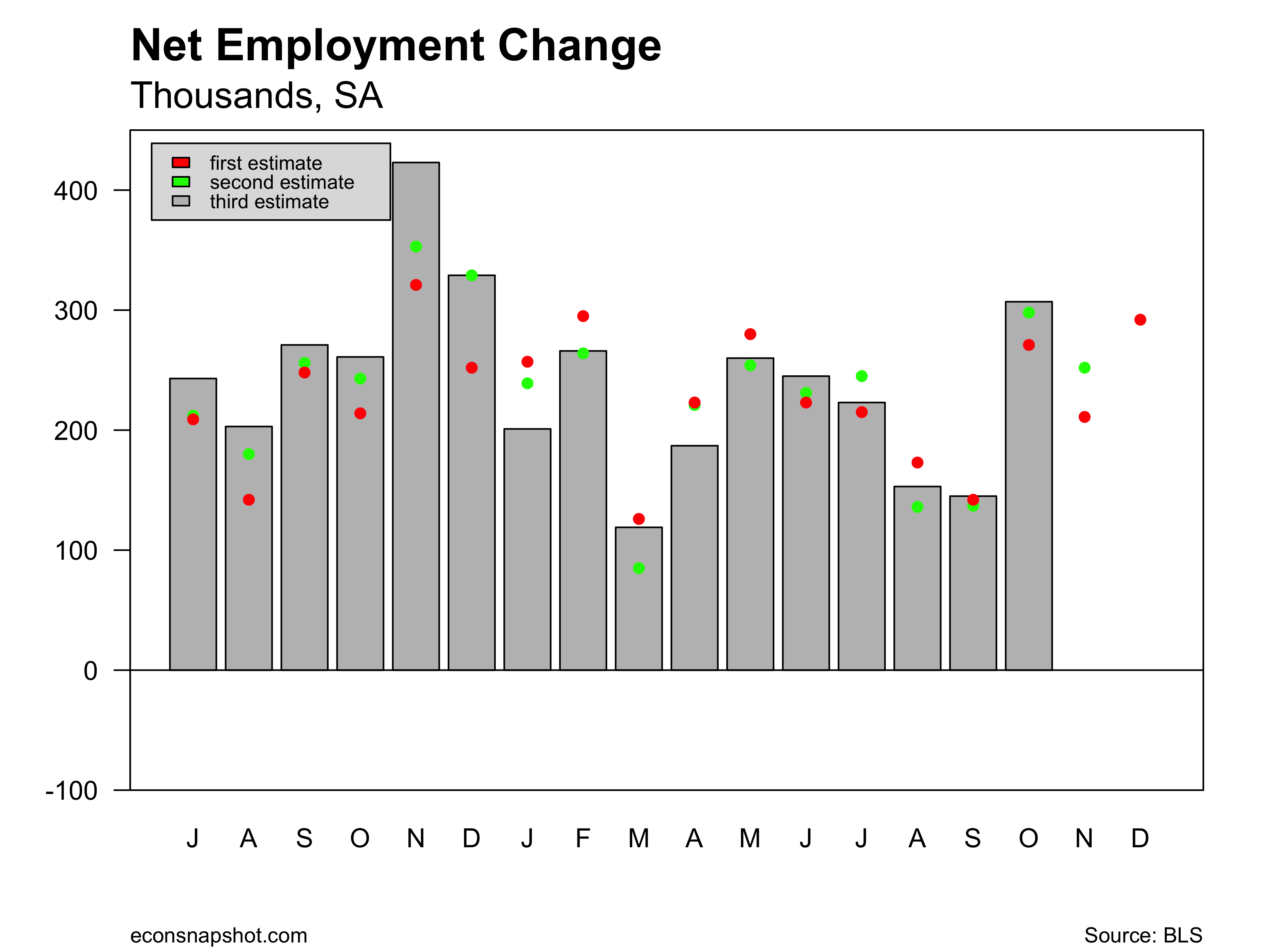
The employment report released on Thursday, before the July 4 holiday on Friday, revealed an employment gain of 223k, but the overall report left a little something for everyone, depending on point of view. The 223k number was slightly less than what many had forecast. All of the increase came from private employment as there was no change in government employment. On tempchgm-2015-07-05he negative side,  there were downward revisions for the past two months, April down by 34k and May down by 26k. In fact, the revisions have all been down since January.

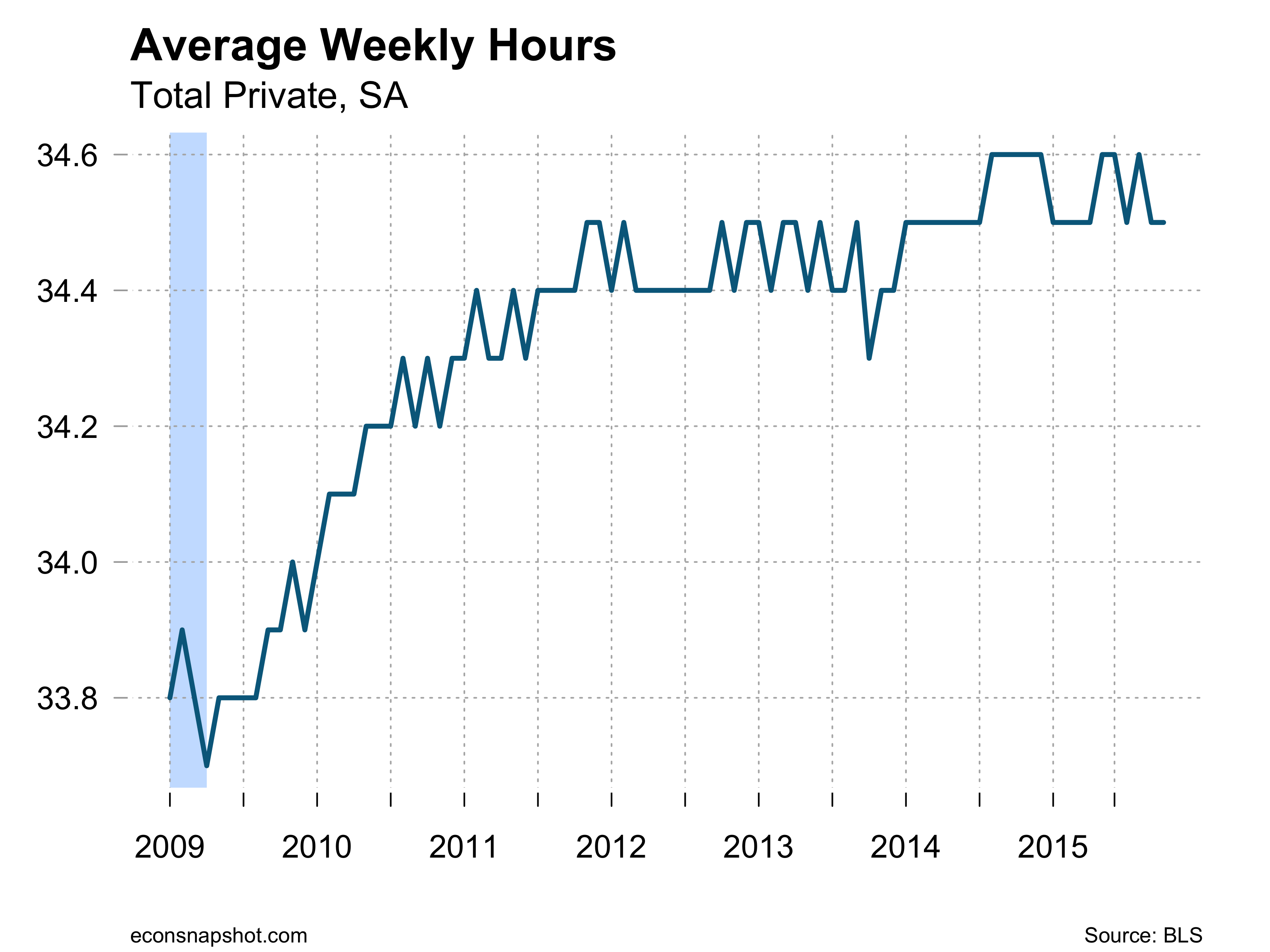
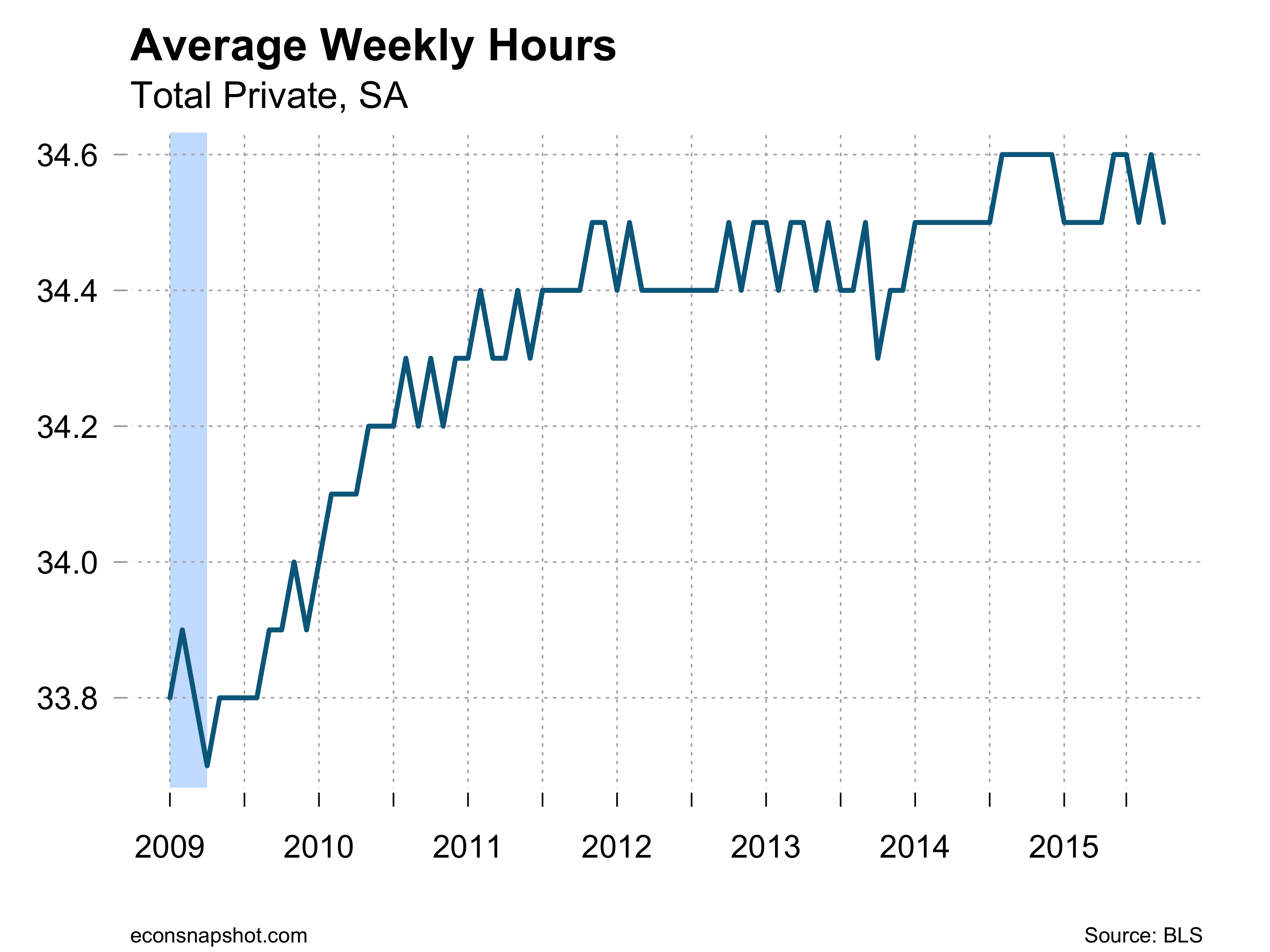
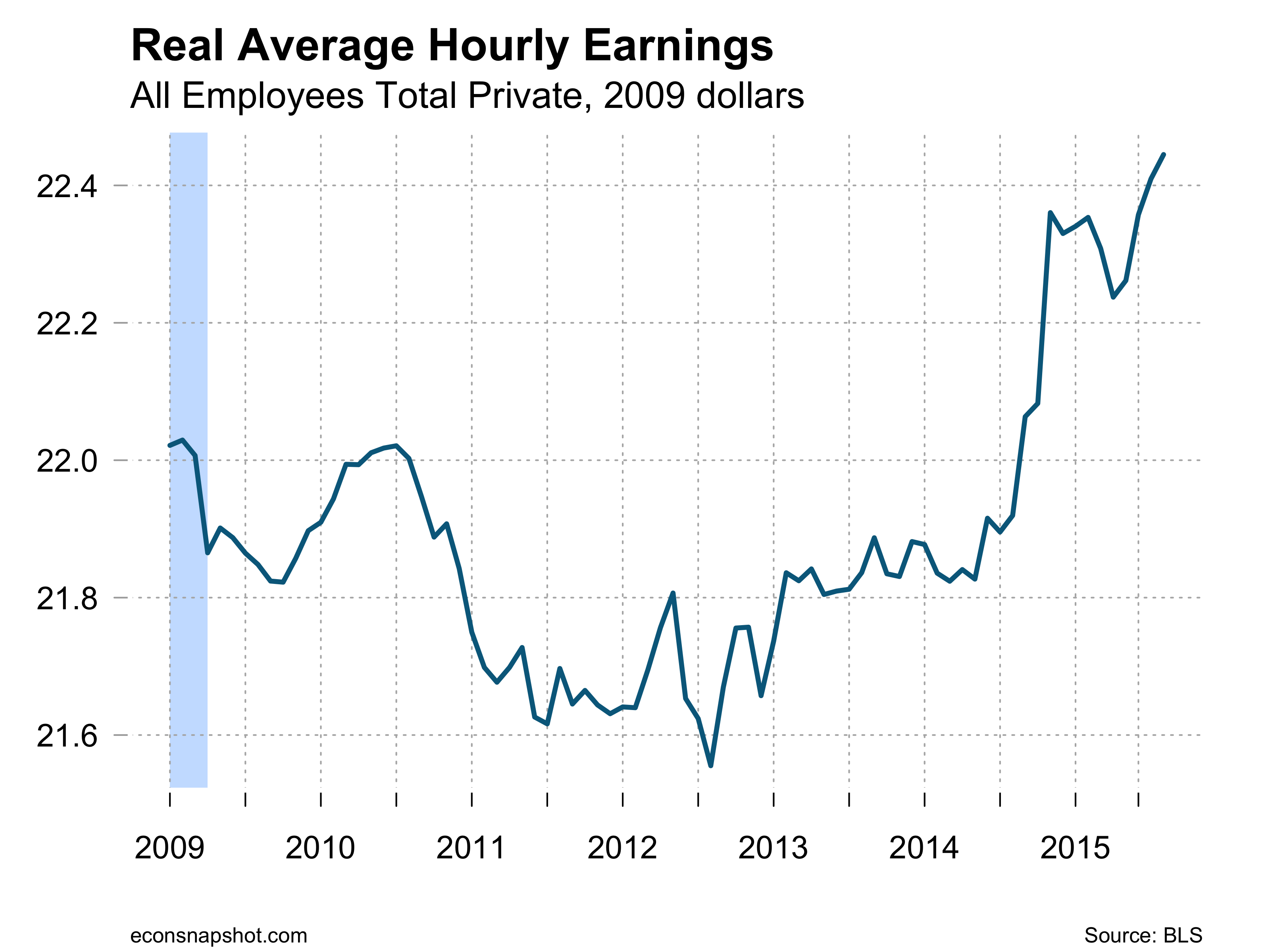
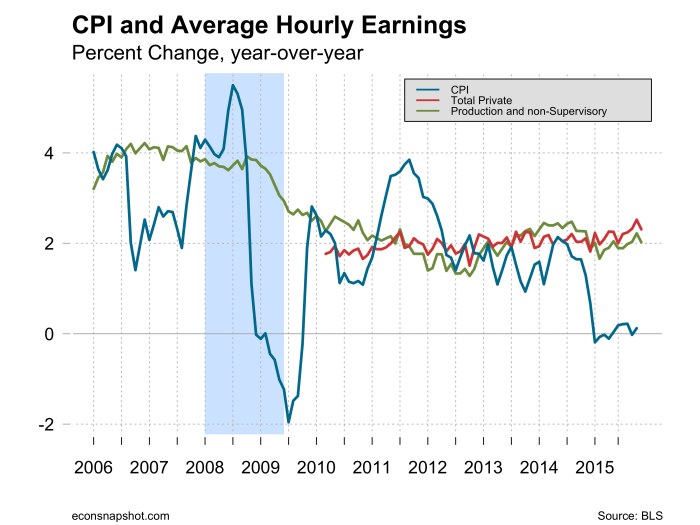
Average weekly hours remained at 34.5 for the fourth straight month and hourly earnings were basically flat.

avghours-2015-07-05

ahecpi-2015-07-05

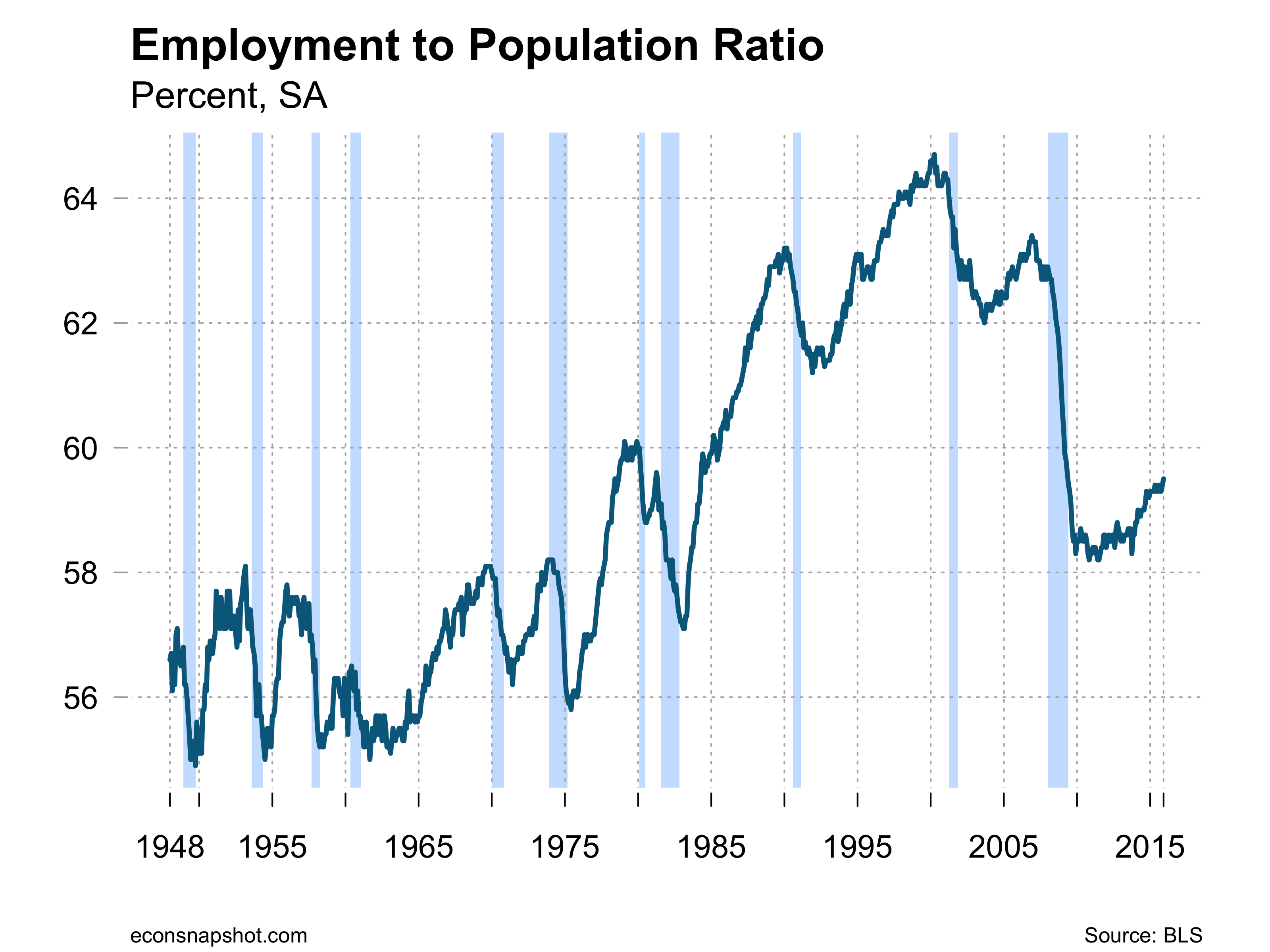
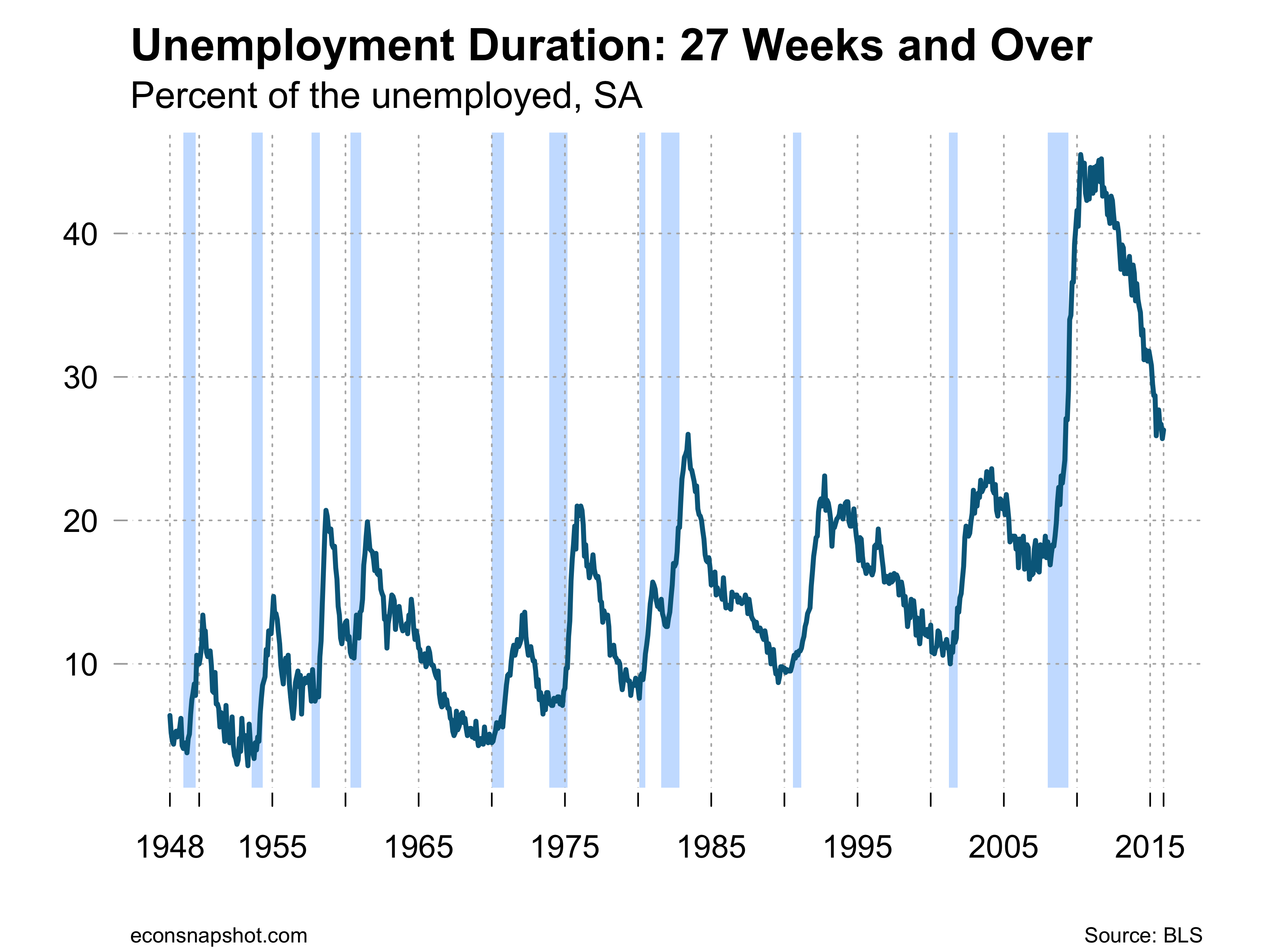
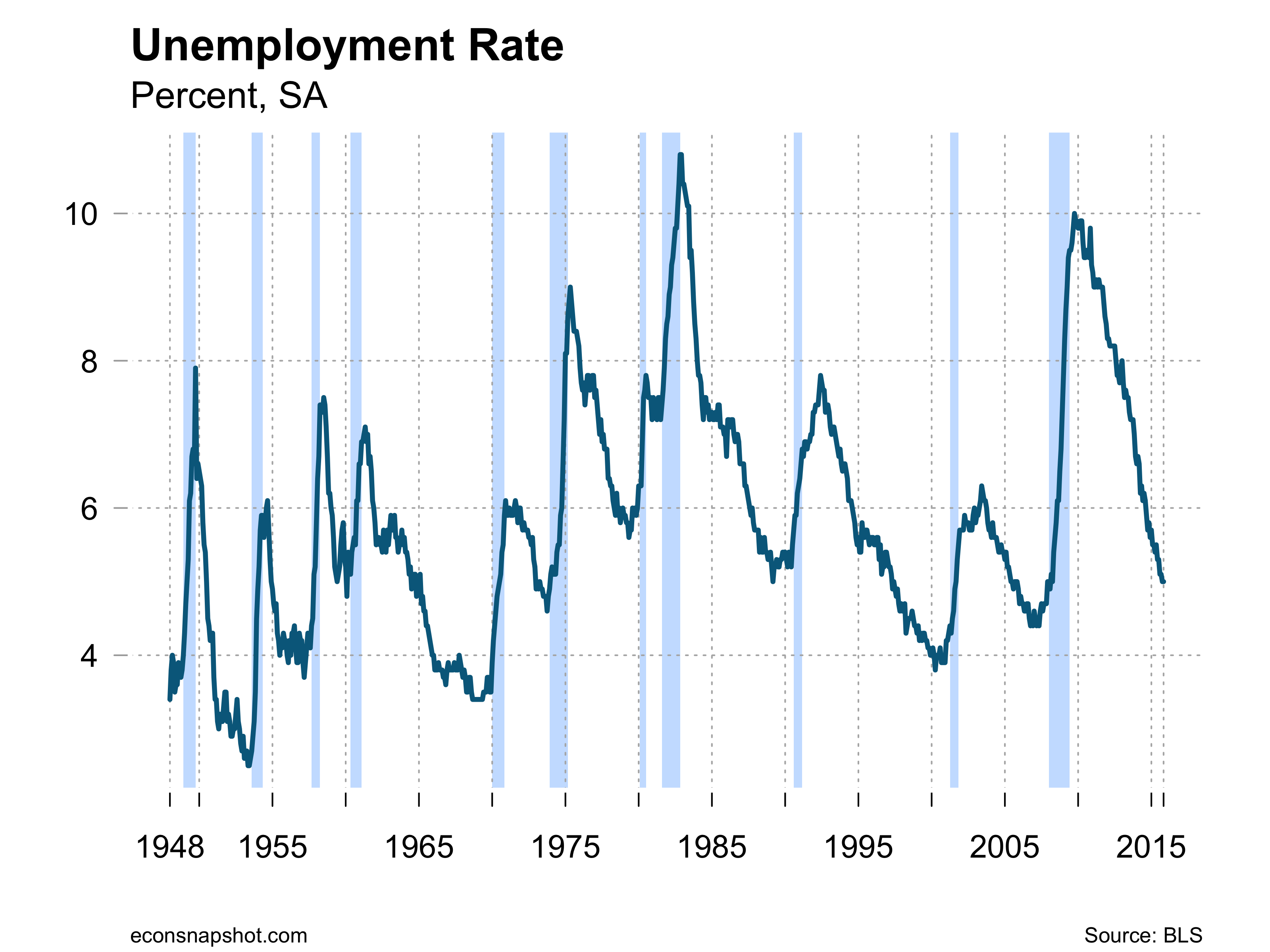
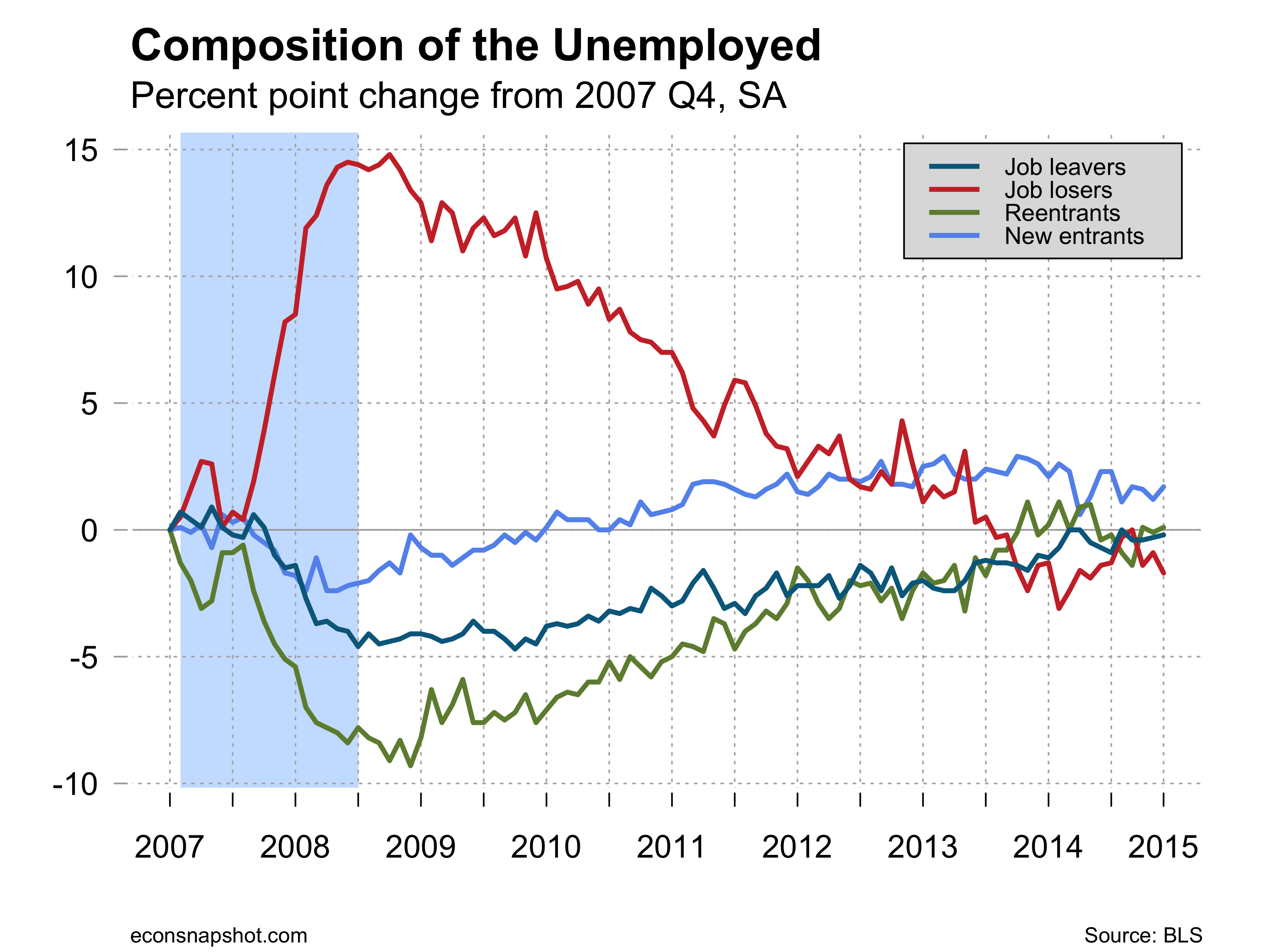
The household data from the CPS was a little more discouraging. Yes, the unemployment rate fell to 5.3%. However, the labor force fell by 432k and the number employed fell by 56k, as did the employment to population ratio, falling to 59.3.  Labor force participation is at an historic low.  So there is no way the labor market could be described as in a robust state. The long term unemployment rate – those unemployed 27 weeks or more  diped sharply.

Many of the remaining problems in the labor market – participation rates, long duration unemployment – appear to be structural, not cyclical.  The structural issues have a lot to do with the way the economy changes over the business cycle, the loss of mid-level human capital jobs, a feature that has been pronounced over the past few cycles. It seems unlikely that the Fed will view these problems as impediments to a more normal monetary policy.

unrate-2015-07-05

lfp-2015-07-05

epr-2015-07-05

The JOLTS data released this morning shows the number of vacancies, 5.4 million, is the highest since the series began in December 2000, and the job openings rate also remains high, higher than at the peak of the previous cycle! However, the hiring rate fell in May, to 3.5% from 3.6% in April. Layoffs and discharges fell slightly and quits were basically unchanged.

joltsjor-2015-07-07

joltshir-2015-07-07

joltssep-2015-07-07

Forward Guidance or Fog?

By Zach Bethune, Tom Cooley and Peter Rupert

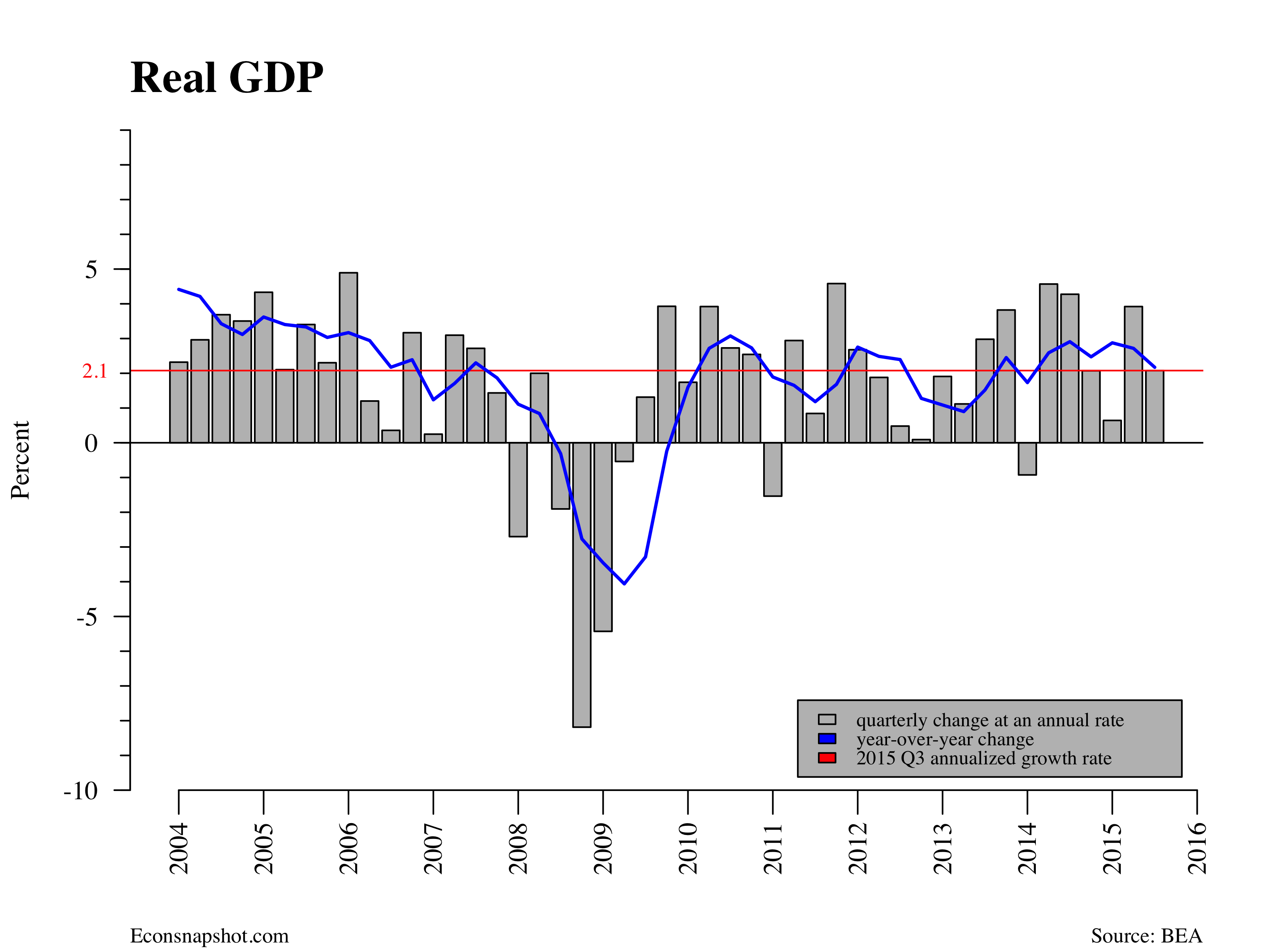
Today’s GDP release from the BEA reveals a modest upward revision in GDP for the 1st quarter from -0.7% to -0.2%. Though still in negative territory the upward revision is certainly welcome. As noted by the BEA, “…primarily reflecting upward revisions to
exports, to personal consumption expenditures, to private inventory investment, to nonresidential fixed investment, and to state and local government spending that were partly offset by an upward revision to imports.” The revisions were pretty much across the board.

gdprealchgm-2015-06-24

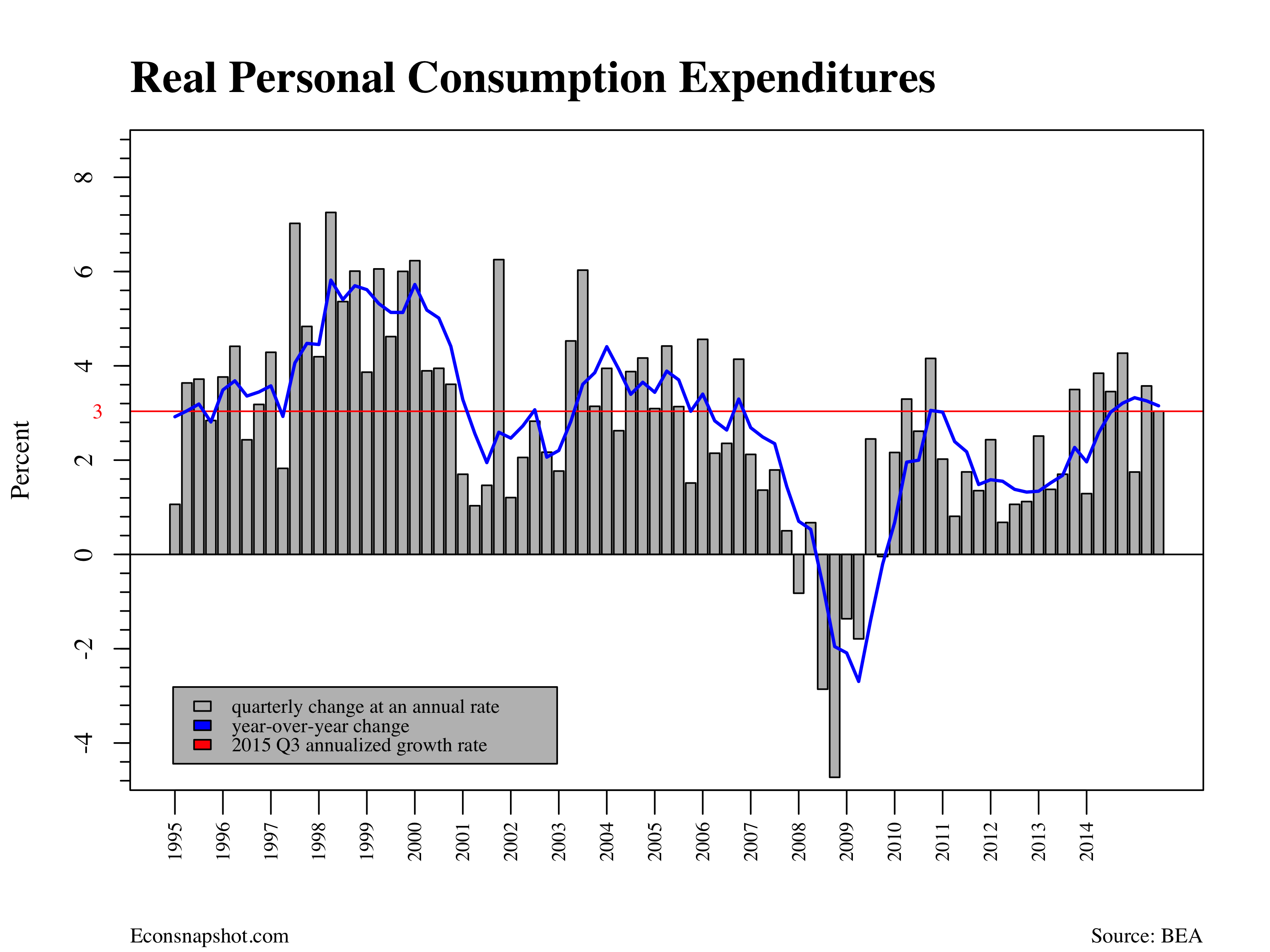
Real personal consumption expenditures increased 2.2%, the weakest recording since the first quarter of 2014. Tomorrow, the personal income report comes out that will give a little clearer picture of the path of consumption to date.

pcerealchgm-2015-06-24

The signals coming in concerning the economy are mixed, making it extremely difficult to gauge upcoming policy moves. The latest meeting of the FOMC along with their statement seems to have left many Fed-watchers, prognosticators, and others suggesting that the Fed is on a path to raise rates in the fall or possibly winter. For example, Jon Hilsenrath of the WSJ says,

The Federal Reserve signaled Wednesday that it was moving toward interest-rate increases later this year, with the economy now firmer after a winter slump, but officials emphasized they would move even more cautiously than expected.

While many seem to suggest that the Fed is on pace to raise later this year, there is certainly nothing in the Fed statement that leads to such a conclusion. Just in case you are confused with Fed-speak, here is another statement…from 2011,

To promote the ongoing economic recovery and to help ensure that inflation, over time, is at levels consistent with its mandate, the Committee decided today to keep the target range for the federal funds rate at 0 to 1/4 percent. The Committee currently anticipates that economic conditions–including low rates of resource utilization and a subdued outlook for inflation over the medium run–are likely to warrant exceptionally low levels for the federal funds rate at least through mid-2013.

The point is that, as the June statement emphasized, the risks are balanced. Meaning that raising rates soon is kind of 50-50. And, as the statement now always reminds us, any future moves are data dependent. So, looking forward, while the risks might be balanced, the risks are many:

  • Uncertainty in Greece continues to plague policy makers and investors….but it seems now likely that many have already priced these risks in the market.
  • Europe continues to have winners and losers, making it difficult to have much faith in any overall forecasts.
  • How will China respond to what appears to be lower growth?

In terms of the US, nothing seems to really stand out yet that would call for the beginning of liftoff. Yes,  employment has risen steadily, albeit slowly…much slower than earlier recoveries…and the unemployment rate is relatively low but labor force participation is also low.

empchgm-2015-06-18

emp-rec-rec-2015-06-18

unrate-2015-06-18

Still, there are many signs of either slow growth or real weakness to offset those indicators. There is really no sign of inflation anywhere, not recently nor in expectations. While the labor market is seeing signs of strength there does not appear to be any wage pressure, and the employment cost index has popped a little recently, but again, is still relatively subdued.

ahecpi-2015-06-18

inflation5yr-2015-06-18

eci-2015-06-18

Average hours have remained pretty flat after picking up several months ago. Moreover, one indicator many use to gauge the health of the economy is output per hour of work (productivity). There also isn’t any real positive news here either as productivity has fallen for two consecutive quarters, the last time this happened was back in 2006.

avghours-2015-06-18

prodbar-2015-06-18

While job openings are near all time highs, the hiring rate continues to climb, but quite slowly.

joltshir-2015-06-18

joltsjor-2015-06-18

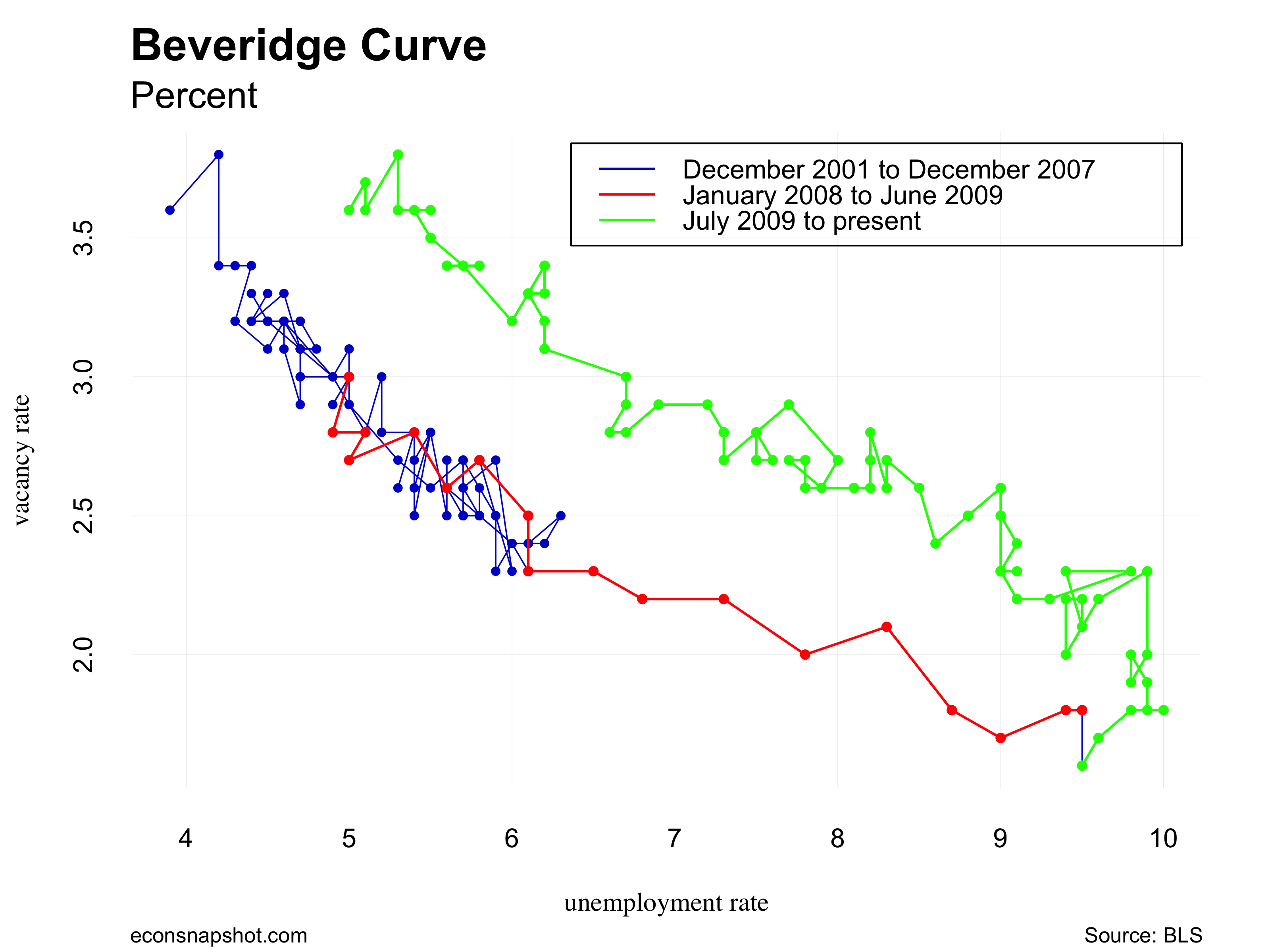
Some economists look at the Beveridge Curve (vacancies vs. unemployment) to see how the labor market is matching job seekers to job vacancies. While the Beveridge Curve has “looped” back, the unemployment rate is about a percentage point higher, given the vacancy level, that it was back in the early 2000’s. One interpretation is that the market is having a more difficult time matching workers to firms, for example, from skill mismatch.

beveridge-2015-06-18

The labor market also looks quite different compared to the early 2000’s in both the employment to population ratio and labor force participation. Both are a long way from their peaks and have remained remarkably flat. Unfortunately, there is little by way of economic theory to enlighten us on what the “right” long run value should be for either statistic. Perhaps the late 1990’s and early 2000’s were unsustainable, and now we are back at more sustainable levels.

epr-2015-06-18

lfp-2015-06-18

Moreover, there is still a substantial fraction of the unemployed who have been in that state for more than 27 weeks. This certainly does not bode well for such workers and it remains to be seen where and when they will eventually land.

udur27-2015-06-18

So, in the end, what does all this mean? It simply means that the shape of the economy is in the eye of the beholder. Data can be presented to bolster either view…to raise or not raise this year. Indeed, the FOMC statement was clear about the cautious outlook:

This assessment will take into account a wide range of information, including measures of labor market conditions, indicators of inflation pressures and inflation expectations, and readings on financial and international developments. The Committee anticipates that it will be appropriate to raise the target range for the federal funds rate when it has seen further improvement in the labor market and is reasonably confident that inflation will move back to its 2 percent objective over the medium term.

The latest inflation numbers do not seem to suggest yet that one would be “reasonably confident” that inflation has moved back to its 2% objective, as the chart below shows, that inflation indicator has often been below the 2% (red line) for much of the time…and the latest reading shows a 2.0% decline. The quarter before saw a 0.4% decline.

pce-pi-quarterly-2015-06-24

Employment Gains, Long Duration Unemployment Remains

By Zach Bethune, Tom Cooley and Peter Rupert

According to the BLS payroll employment increased by 280,000 with nearly all of that coming from private sector jobs, which increased 256,000 . The report also included an upward revision to March of 34,000 and a slight downward revision to April, -2,000. The goods producing sector was weak, adding only 6,000, with evident weakness in the petroleum sector: mining and logging shedding 18,000 jobs.  Fortunately, now the March decline in new jobs looks like an outlier with the economy adding a healthy number of new private sector jobs each month.

empchgm-2015-06-05

emp-mining-support-cyc-2015-06-05

Other than the goods producing sector and a small decline in the services “information” category, the gains were robust across all sectors private and public. Although average hours were flat as were average hourly wages, but because inflation is so low, real earnings ticked up somewhat.

avghours-2015-06-05

ahecpi-2015-06-05

From the household survey the BLS reports an increase in the labor force of 397,000 and a slight uptick in the labor force participation rate as well as the employment to population ratio. These are encouraging signs the employment opportunities may be seen as improving.

lfp-2015-06-05

epr-2015-06-05

There was also a decline in the number of persons unemployed less than 5 weeks, there are now 311,000 fewer. However, there is still a significant number of those unemployed over 27 weeks, that number fell by only 23,000, while those unemployed between 5 and 26 weeks increased by 379,000. The longer term unemployed are much less likely to find work and it has proved to be a persistent problem as those workers are likely losing skills while not at work. Moreover, those unemployed more than 27 weeks represent about 26% of those unemployed.

udur27-2015-06-05

However, there are other encouraging signs in the labor market. Quits continue to rise.

joltssep-2015-06-05

And, there has also been a significant spike in those workers working part time for economic reasons transitioning to full time employment.

rate-pter-fter-2015-06-05

Downward Q1 Revision

by Zach Bethune, Tom Cooley, and Peter Rupert

Today’s second estimate of Q1 GDP issued by the BEA reveals a downward revision of nearly one percentage point, from 0.2% to -0.7.

gdprealchgm-2015-05-29

gdp-cyc-2015-05-29

Many prognosticators envisioned an even larger drop so this “restrained” decline might not send shock waves across markets…unless, of course, there are other signs of weakness moving forward that might signal weaker Q2 growth. For example, inventories were revised down by about half of what people thought, $15.2 billion. While personal consumption expenditures saw almost no revision, the (expected) downward revision in exports materialized, revised down by $26.3 billion. Final sales also saw a big downward revision compared to the advance estimate, from -0.5 to -1.2.

Residual Seasonality and GDP vs. GDI

A recent report from the San Francisco Fed argues that the large revisions to first Quarter data and the remarkable weakness in the first quarter for the last few years may be the result of “residual seasonality” rather than fundamentals.  Economists at the Federal Reserve Board reached a similar conclusion.  The Bureau of Economic Analysis is looking at this issue and will incorporate their conclusions into the July revisions to GDP. Many expect that review to result in a .5% or so upward revision of the data In our view it would be a mistake to attach too much importance to this possibility.  The first quarter was unquestionably weak for reasons that were quite foreseeable. Some of it was bad luck (i.e. bad weather and port strikes) but some of it was fundamental – lower exports because of a stronger dollar and weakness in other economies.

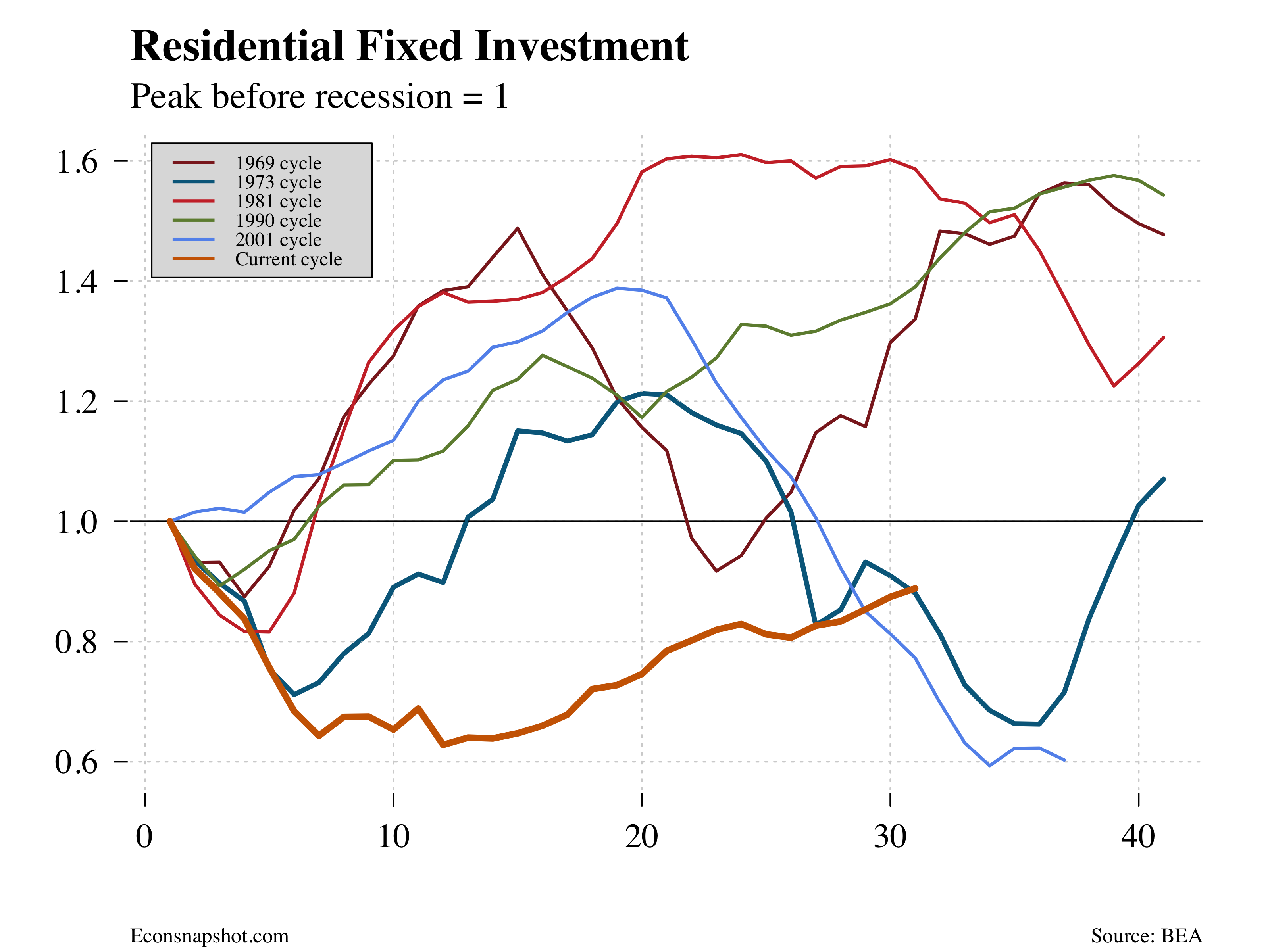
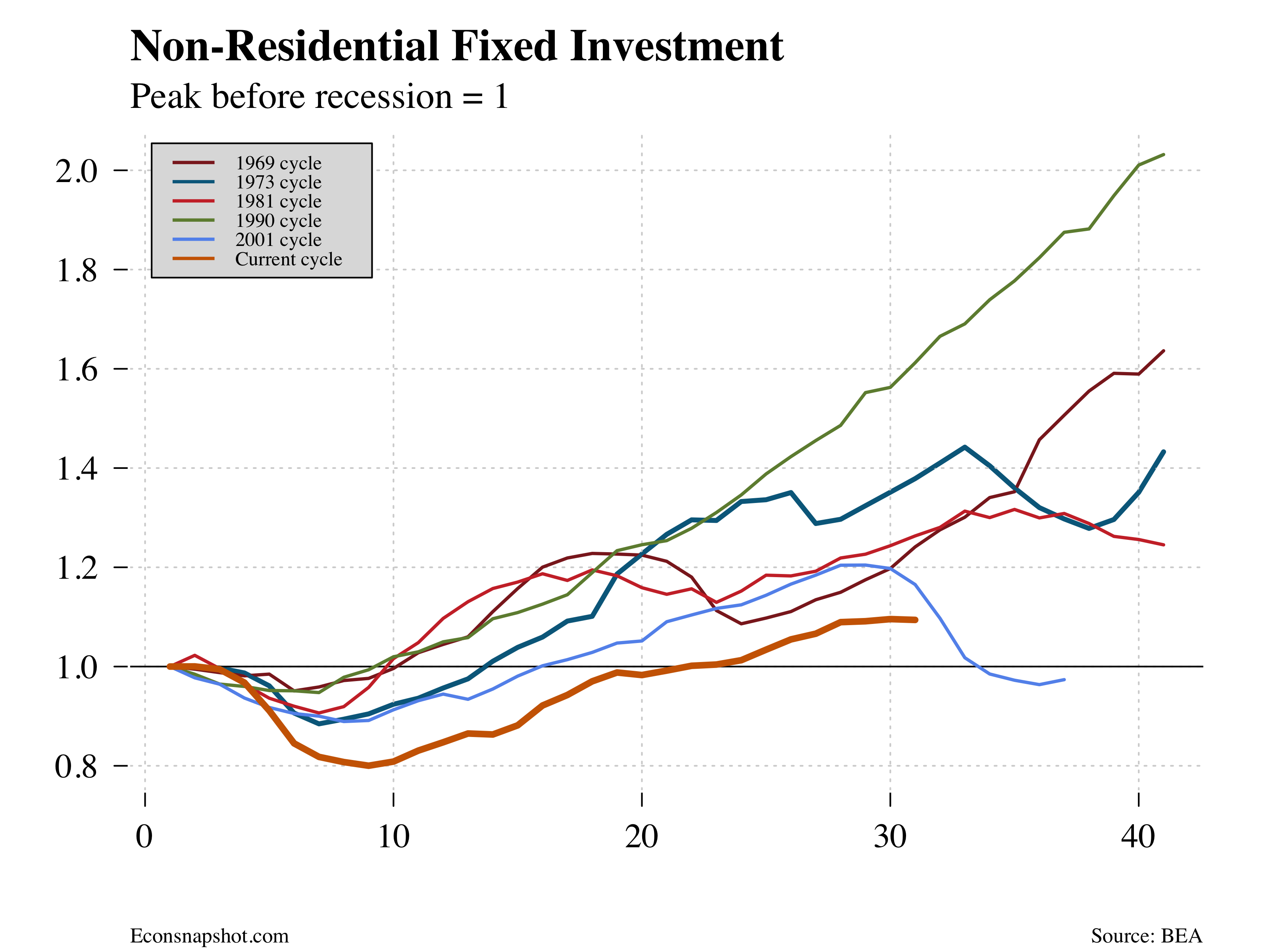
The more important issues are twofold: How does this bear on the argument that we we are caught in a period of “secular stagnation” as former Treasury Secretary Larry Summers and others have argued. And, how does the weaker economic growth impact the probability of Fed “liftoff” in the near future.  On the first question it would be hard to refute the idea that U.S. potential GDP has shifted down a notch. Compared with previous recoveries this one continues to be anemic. There has also been a distinct slowing of both residential and non-residential fixed investment that does not bode well for future growth of the economy.

Another theme that has emerged is a discussion of the merits of looking at Gross Domestic Income (GDI) vs. GDP. The argument is that GDI is a better gauge of the economy than the traditional Gross Domestic Product (GDP) measure. The reasons given can be found here and here. As the graphs below show, however, this is certainly not a matter of using one or the other.  Each has shown lackluster performance. In NIPA theory these two measures are equivalent, but, GDP and GDI do differ at times. Over a long time frame, they do indeed almost perfectly rest on top of each other.

gdp_gdi2015-05-30

If we zoom in to the recent experience since 2007, real GDI has performed better than real GDP. Indeed it is the end points that signal a decline in real GDP but not in real GDI…

gdp_gdi-20072015-05-30

…but it was the opposite in the early 1990’s when real GDI does worse than real GDP.

gdp_gdi-19902015-05-30

However, the main point to be made here is that using either one tells a story of an anemic recovery since the Great Recession of 2007, and splitting hairs over GDP vs. GDI seems a minor issue.

gdp-cyc-2015-05-30

gdi-cyc-2015-05-30

All of these factors are going to caution the FOMC when it meets in June because the last thing they want to do is derail a recovery that is now both mature and showing some signs of weakness. By and large the labor market seems to be operating near full employment, albeit without wage growth. Whether the first quarter weakness signals a more prolonged slowdown won’t be known for some time but it seems likely to put liftoff on hold for a while.

pcerealchgm-2015-05-29

rfi-cyc-2015-05-29

nrfi-cyc-2015-05-29

April Employment…Not Bad

by Zach Bethune, Tom Cooley and Peter Rupert

Today’s employment report for April from the BLS showed a solid gain in employment +223,000. However, a downward revision of -41,000 leaves March at a disappointing 85,000 with one more revision to go. Probably the best thing about the report is that it was not bad. The numbers roughly hit the consensus forecast of 230,000. But the recent performance underscore how noisy this estimate is.  Nevertheless, the numbers signal an economy that is growing slowly, but definitely growing in spite of many challenges in the global environment.

empchgm-2015-05-08

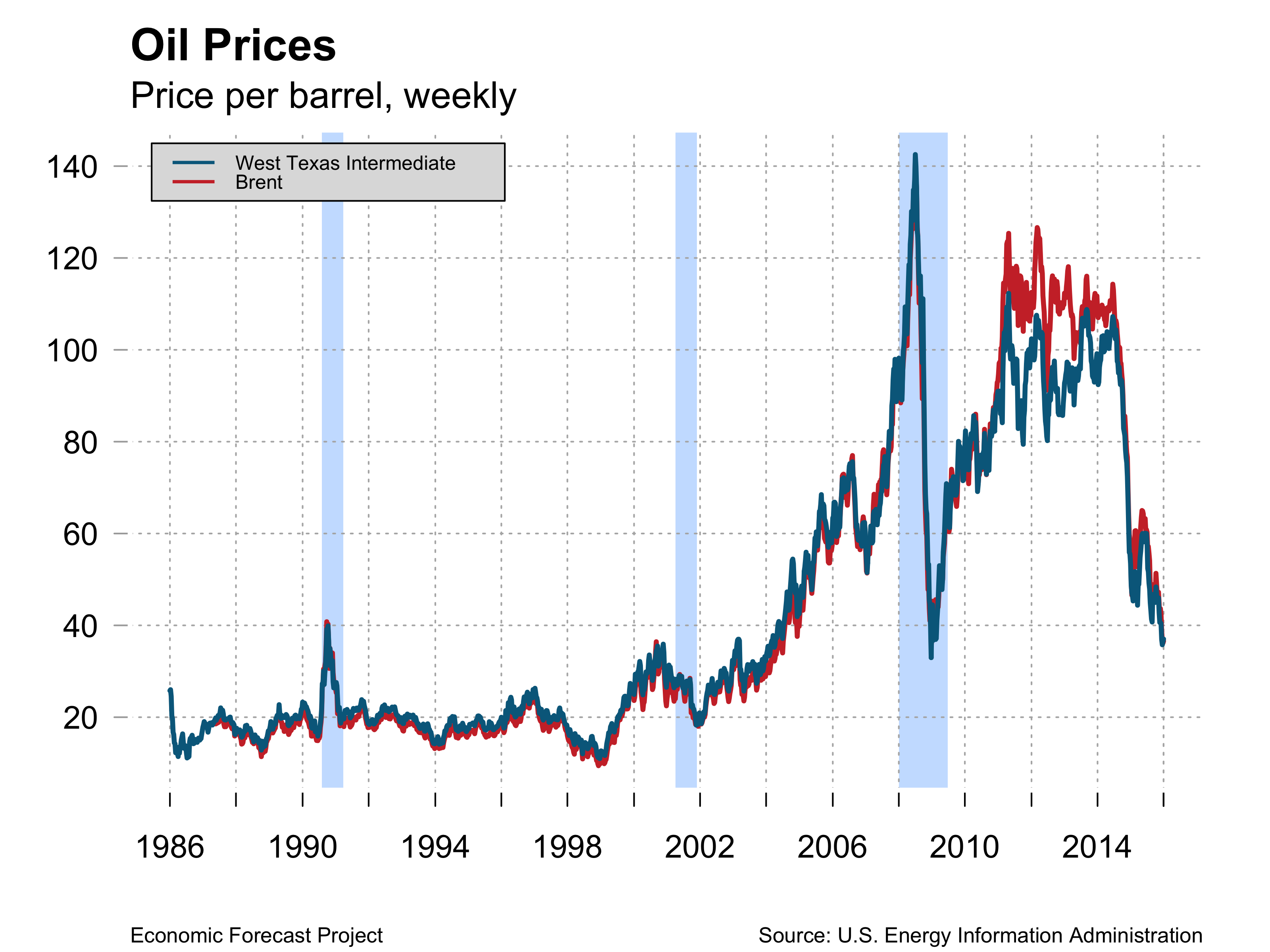
The gains, however, were pretty much across the board, although, mining and logging saw a third straight month of decline as the oil industry continues to struggle with the low oil prices. There has been a slight uptick in those prices of late.

oil

Average hours of work have remained pretty flat over the last few months, around 34.5.

avghours-2015-05-08

Nominal earnings growth remains flat, but in real terms, labor income is up.

ahecpi-2015-05-08

ahecpipceps-2015-05-08


compensation-cyc-2015-05-08

On the household side of the ledger, there was a fairly restrained increase in employment, 166,000. The unemployment rate declined slightly to 5.4%…that is from 0.05465056 to 0.05442727.

unrate-2015-05-09

And the long term unemployed (27 weeks and over) fell slightly but remains elevated, obviously a concern as these workers may lose skills and become even more difficult to hire.

udur27-2015-05-09

The employment to population ratio is also quite sluggish…stuck at 59.3% since February.

epr-2015-05-09

The other slightly negative news is that productivity declined for the second straight month…it is the first time this has happened since 2006!

prodbar-2015-05-09

Putting this together, it appears as if the good news is that it wasn’t bad news…meaning that it does not appear that it will change anyone’s view of when the Fed will begin liftoff. Many commentators have feared that future revisions of Q1 GDP could show that it actually shrank.  These number do not seem consistent with that, although as noted above, they could be revised downward as well.

1st Quarter GDP Disappoints…Again.

by Zach Bethune, Thomas Cooley and Peter Rupert

Today’s release of first quarter real GDP by the Bureau of Economic Analysis saw another weak 1st quarter, gaining only 0.2% at an annual rate.  It was expected that first quarter growth would be weak but this was below most analysts estimates. They were off by about a full percentage point as the median forecast was around 1%. The first quarter of last year was forecast to be around 1.1% and the eventual revisions left it at -2.1%!  It may well be that the first quarter numbers for 2015 will eventually come in negative.

gdprealchgm-2015-04-29

While there is much discussion of the impact of a severe winter on GDP…that is only a small part of the story. The bigger issues facing the economy are declining commodity prices – particularly oil prices and the much stronger U.S. dollar as other countries try to stimulate their domestic economies. The U.S. is a big oil producing economy so the impact of lower oil prices, while helping consumers, hurts producers and has a decidedly chilling impact on investment. In the first quarter alone, twenty five central banks around the world eased their monetary policies in an attempt to stimulate their economies. The effects of these could be long lasting. The decline in investment is likely to be a long lasting drag on growth. The decline in exports is only the first wave of the impact of a strengthening dollar.

oil

useuro-2015-04-30

The biggest detractors from GDP growth in the first quarter were non-residential fixed investment and exports.

gdp-cyc-2015-04-29

nrfi-cyc-2015-04-29

rfi-cyc-2015-04-29

exp-cyc-2015-04-29

Nevertheless, the U.S. has an interest in other countries stimulating their economies. The U.S. is still the strongest game in town. Europe and Japan have continued to lag far behind in the recovery from the financial crisis – a fact the following graph makes very clear. But this tolerant stance will become more difficult to maintain when the Fed begins the cycle of raising interest rates later this year. That will undoubtedly strengthen the dollar further and raise questions about the unsynchronized nature of monetary stimulus among developed economies. So what does all this mean for the Fed and the future of policy? With such a weak reading for GDP and with the Atlanta Fed’s GDPNow forecast of just 0.9% growth for the second quarter likely means liftoff is likely not in the cards for the next couple of meetings at least.

gdp-US-various-2015-04-29

gdp-US-EU17-Japan-UK2015-04-29

The Labor Market Falters

by: Zach Bethune, Thomas Cooley, Peter Rupert

Today’s Employment Situation  revealed a gloomy picture of the labor market for the first quarter of 2015. Non-farm employment increased by 126,000 in March, well below expectations. Job growth in January and February was revised down by 13%. Ovearall the picture is one of a stagnant labor market in the first quarter.  The unemployment rate remained unchanged, wages increased slightly and hours worked declined slightly.  The transition rate from unemployment to employment remained unchanged.

What are the implications of these developments for the future?  Some of the decline in job growth is due to declining oil and commodity prices.  Employment in the mining sector and construction fell as drilling declined sharply. Some of it was due to particularly severe winter which slowed economic activity.  These are both short term effects. Oil prices will not likely fall much more and the positive effects of consumers having more disposable income will show up gradually over time. If that is all we are dealing with we might expect the damping effect on labor markets to be short-lived.  More troubling for the longer term outlook is the dramatic rise in the value of the dollar.  Since the beginning of 2015 25 central banks have eased monetary policy. The list includes China, the ECB, and Canada, major trading partners of the U.S.  This has pushed up the value of the dollar precipitously and the effects of that on our export industries are only beginning to be felt. Exports declined in the most recent trade report and the effects on employment will, most likely, be increasing and ongoing.

A sluggish labor market and sluggish GDP growth all suggest that Fed will have plenty of reason to be patient at its June meeting and has plenty of breathing room for deciding on the timing of liftoff.

empchgm-2015-04-03

avghours-2015-04-03

emp-construction-2015-04-04

emp-construction-cyc-2015-04-04

emp-mining-support-2015-04-04

emp-mining-support-cyc-2015-04-04

emp-mining-support-cyc-2015-04-04

emp-construction-2015-04-04

emp-construction-cyc-2015-04-04

Unemployment

unemp-rec-rec-2015-04-03

unemp-composition-2015-04-03

ubyschool-2015-04-03

beveridge-2015-04-03

Part time for economic reasons

pter-2015-04-03

rate-pter-fter-2015-04-03

Final Estimate of 4th Quarter GDP

by: Zach Bethune, Thomas Cooley, Peter Rupert

The third and final estimate of GDP released today by the Bureau of Economic Analysis provides no substantial new information on the growth of the economy…and therefore little to guide us to the future of interest rate changes by the FOMC. The final number for real GDP growth for Q4 is 2.2%, seasonally adjusted at an annual rate.

gdprealchgm-2015-03-27

Since the negative growth rates in 2008 and 2009, real GDP growth has been weak, but fairly steady year to year, 2010: 2.5%, 2011: 1.6%, 2012: 2.3%, 2013: 2.2%, and 2014: 2.4%; but, as noted here and elsewhere, quite slow relative to previous expansions.

gdp-cyc-2015-03-27

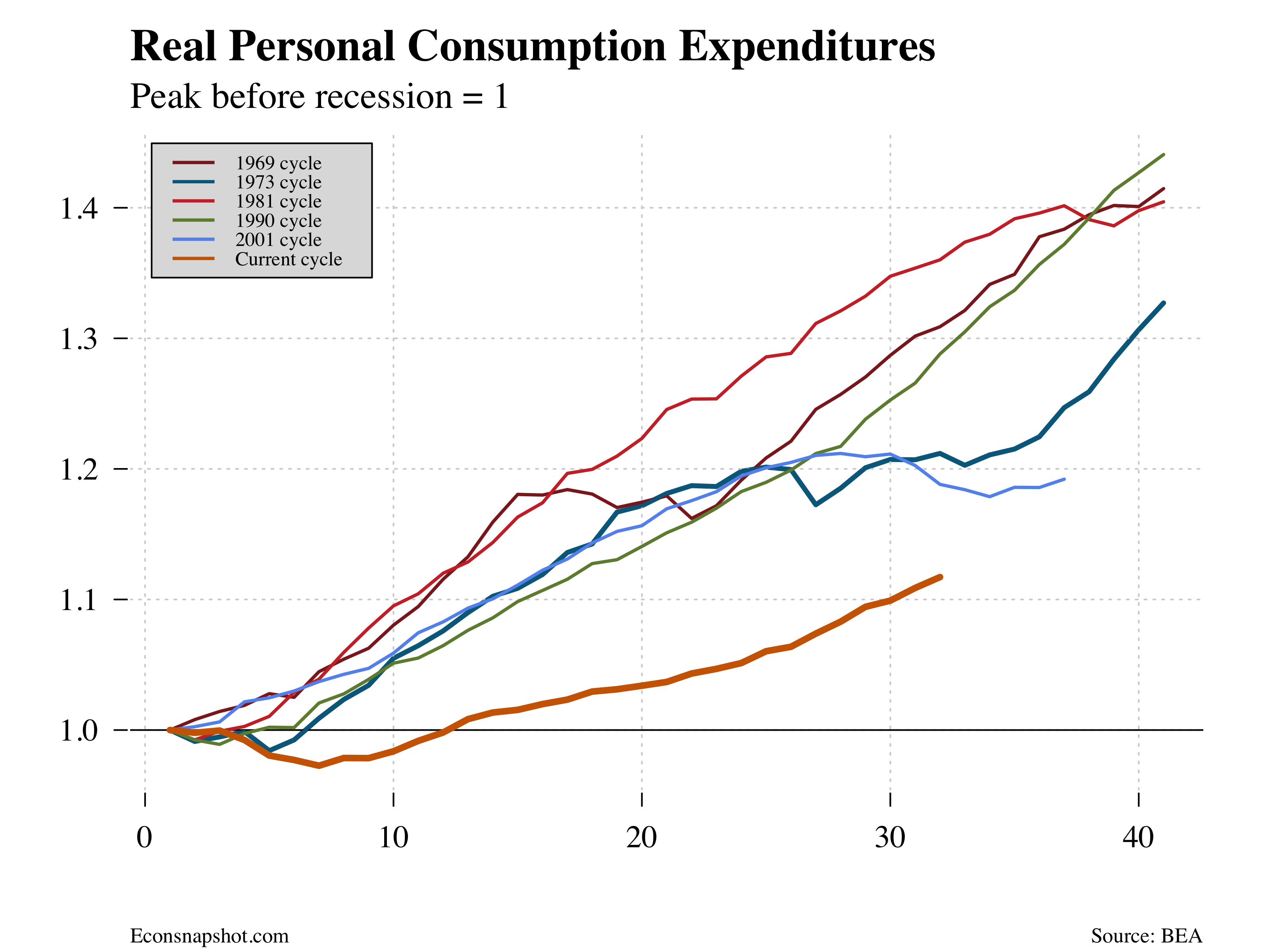
Consumption growth received a small boost, as did net exports, but inventories took a hit.

pce-cyc-2015-03-27

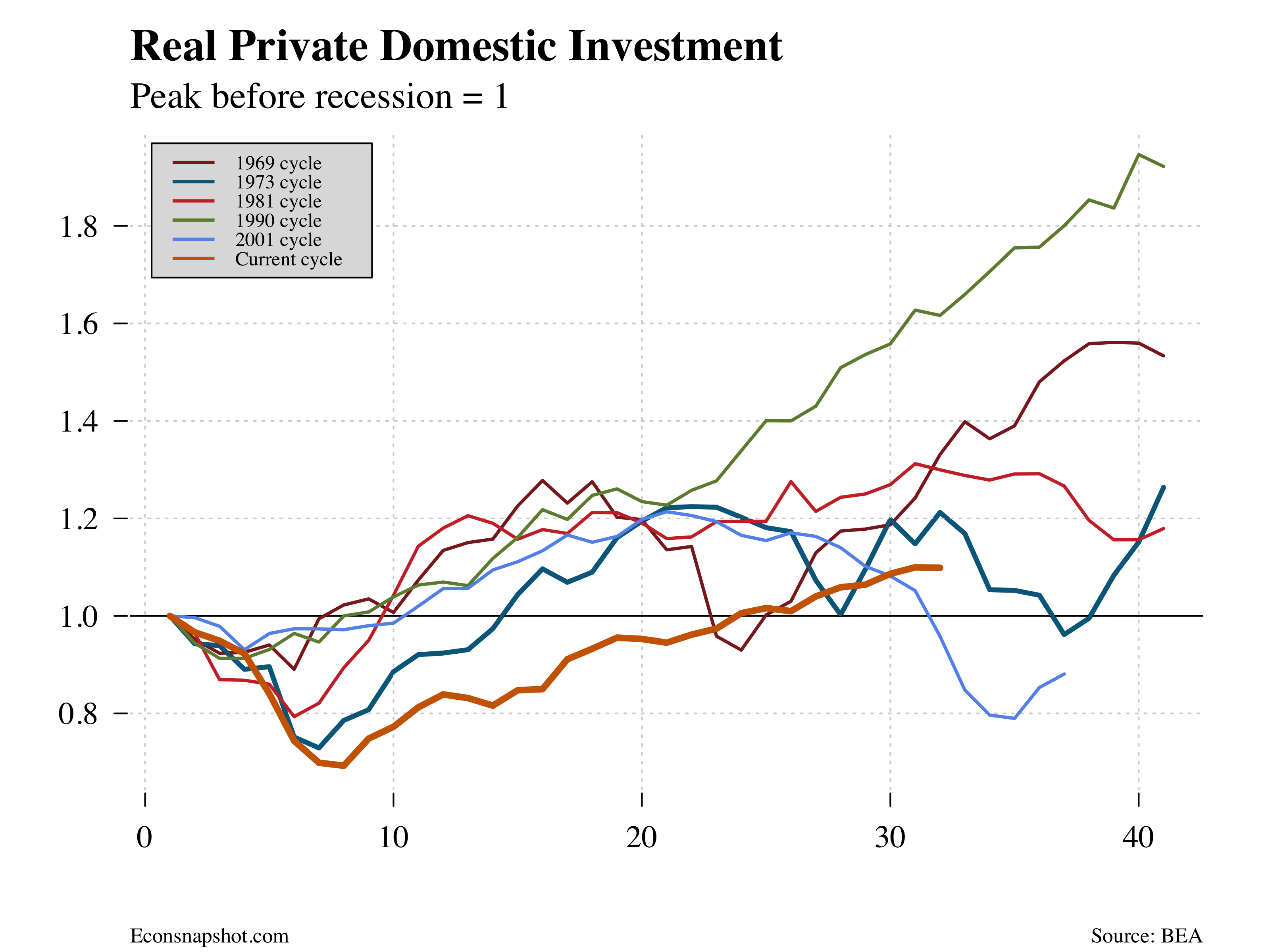
Real investment took about 25 quarters to get back to it 2007 peak, typically taking only about 10 quarters. Residential fixed investment has yet to get back to its peak in 2007, it is still about 14% below that level.

inv-cyc-2015-03-27

nrfi-cyc-2015-03-27

rfi-cyc-2015-03-27

imp-cyc-2015-03-27

exp-cyc-2015-03-27

There is still real debate within the FOMC, however. From KC President George’s remarks: “While the FOMC has made no decisions about the timing of this action, I continue to support liftoff towards the middle of this year due to improvement in the labor market, expectations of firmer inflation, and the balance of risks over the medium and longer run. Liftoff in the middle of this year, in my view, would be fully consistent with the FOMC’s Statement on Goals and Monetary Policy Strategy, which reminds the public that monetary policy actions tend to influence economic activity and prices with a lag.” But, Chicago President Evans from a speech in London: “What is my personal view of the appropriate path for Fed policy? I think economic conditions are likely to evolve in a way such that it will be appropriate to hold off on raising short-term rates until 2016.”

In their own words, the future of lift-off will be “data-driven.” When isn’t it?

February Employment Stays Strong

by: Zach Bethune, Thomas Cooley, Peter Rupert

According to the Bureau of Labor Statistics establishment survey, employment increased 295,000 from January to February and has increased by about 3.3 million since February 2014. January employment was revised down slightly by 18,000 and December had no revision.  This continues the trend of strong employment growth consistent with an an ongoing robust recovery.  The unemployment rate fell further to 5.5% average weekly hours were flat and average hourly earnings rose only slightly. 

empchgm-2015-03-06

Job gains were robust, only mining and logging, non-durable goods, and temporary help services saw small declines. Is the decline in temporary help services, for the second month in a row,  a signal of underlying strength in that firms are relying more on full-time workers rather than temps?  Maybe, but, as the chart below shows, as a fraction of total employment, firms use temp help much less during downturns.  Moreover, the use of temp services has doubled relative to total employment since the early 1990’s.

temps-2015-03-06

Average weekly hours have remained fixed at 34.6 for the past 5 months after being stuck at 34.5 for the previous 7 months. Average hourly earnings rose only slightly from $24.75 to $24.78.

avghours-2015-03-06

While the establishment survey provided solid numbers, the household survey provided some mixed messages. True, the unemployment rate fell from 5.7% to 5.5%.

unrate-2015-03-06

But the labor force fell by 178,000 leading to a decline in labor force participation from 62.9 to 62.8 and no change in the employment to population ratio at 59.3.

lfp-2015-03-06

epr-2015-03-06

The number of persons working part time for economic reasons fell by 175,000, with 165,000 fewer reporting slack work reasons. The number of persons reporting part time for non-economic reasons increased by 15,000.

parttimefrac-2015-03-06

All of this seems to provide further support for the view that the Fed should begin normalizing monetary policy sooner rather than later. Although recent communications have emphasized the view that they could be “patient,” we expect that language to disappear. The graphs below show the continued strength in the labor market, albeit slower than coming out of previous recessions.

emp-rec-rec-2015-03-06

unemp-rec-rec-2015-03-06

4th Quarter GDP….Downward Revision….Keeps Us Guessing

by Zach Bethune, Thomas Cooley and Peter Rupert

GDP Report
The BEA’s second estimate of 4th quarter GDP trimmed the growth rate to 2.2% from 2.6%. The downward revision will certainly give those more “patient” policy makers additional ammo to sit back and let the dust settle further before making any moves.

gdprealchgm-2015-02-27

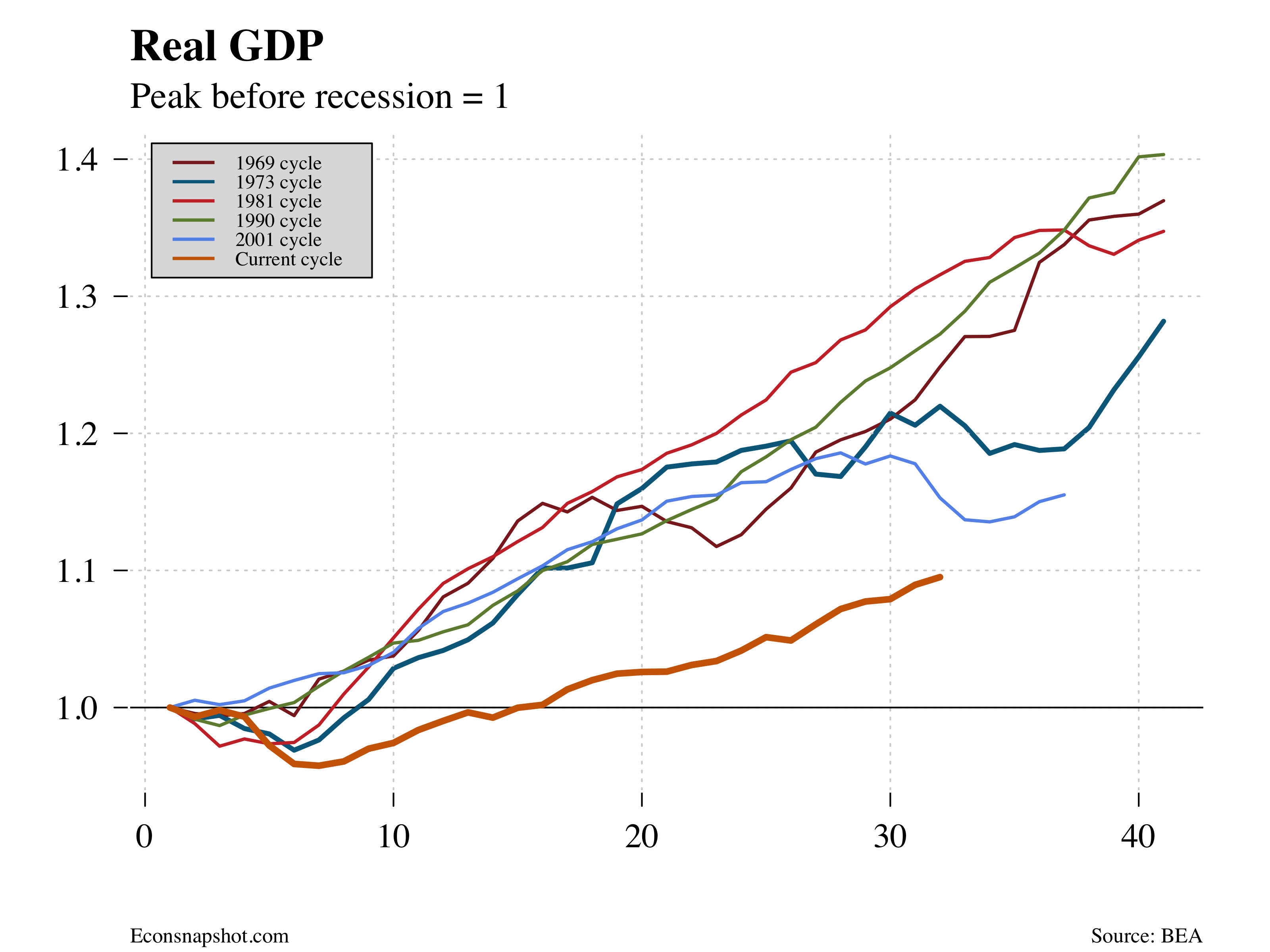
Since the recovery began, real GDP has continued a long, slow climb out of the depths. As is evident in the graph below, the growth has been weaker than the typical recovery. Said differently, almost 30 quarters since the previous peak real GDP is less then 10% higher now; however, in the past real GDP was 20-30% higher after 30 quarters from the previous peak.

gdp-cyc-2015-02-27

Meanwhile, a version of the Taylor Rule with unemployment targeted at 6% and inflation at 2% calls out for an increase…and has been for more than 4 years.

taylor-rule-2015-02-27

However, average hourly earnings growth has been anemic, stuck around 2% since 2010, meaning any changes in real earnings came from changes in inflation. The latest drop in inflation has meant an increase in real hourly earnings of about 2%. As can be seen in the graph below real hourly earnings growth since 2010 spent lots of time in negative territory, rarely hit even 1% and has averaged about zero.

ahecpi-2015-02-28

Moreover, five year out inflation expectations are also low.

inflation5yr-2015-02-28

With no inflation pressures now or later, many on the FOMC likely feel little reason to begin liftoff. Indeed, from Chair Yellen’s remarks to Congress,

In sum, since the July 2014 Monetary Policy Report, there has been important progress toward the FOMC’s objective of maximum employment. However, despite this improvement, too many Americans remain unemployed or underemployed, wage growth is still sluggish, and inflation remains well below our longer-run objective.

While many were thinking that liftoff might begin in the middle of this year, but these words from her testimony imply later rather than sooner,

The FOMC’s assessment that it can be patient in beginning to normalize policy means that the Committee considers it unlikely that economic conditions will warrant an increase in the target range for the federal funds rate for at least the next couple of FOMC meetings. If economic conditions continue to improve, as the Committee anticipates, the Committee will at some point begin considering an increase in the target range for the federal funds rate on a meeting-by-meeting basis.

But recent data have confirmed that falling oil and commodity prices may be masking movements in prices. Core inflation – excluding food and energy – jumped at the last reading and markets reacted.  The FOMC seems to be leery of acting too soon on liftoff but the bigger worry is that the costs of acting too late might be higher.

Finally, from the end of the testimony,

As always, the Federal Reserve remains committed to employing its tools to best promote the attainment of its objectives of maximum employment and price stability.

Good to know, thanks.